
.png)
From Lice Panic to Sleep Education: How Parents Can Calm Bedtime Chaos
- chevy mermelstein
- Sep 28, 2025
- 4 min read
Updated: Apr 24
When a Neighbor’s Warning Brings Back Memories
A few hours ago, my neighbor came to my door and said something that made my stomach drop: “All my kids have lice. I just wanted to give you a heads-up since your daughter has been playing with them.”
Instantly, my mind went into overdrive. I felt a cold wave of panic wash over me. Not again. Please, not again.
Years ago, one of my children had a severe case of lice. She had the thickest, tightest curls you could imagine. I was seven weeks postpartum, running on zero sleep, surviving on coffee and sheer willpower, and already barely keeping it together.
I remember the hours—hours—spent combing her hair inch by inch, every single day. The itching, the crawling feeling, the endless search for nits. My arms ached, my back ached, my brain ached. Weeks later, we were finally lice-free, and I swore I’d never, ever go through that again.
So when my neighbor said the word “lice,” my chest tightened, my hands froze. I could hardly breathe. My mind raced through worst-case scenarios: endless combing, chemicals, sleepless nights, and me pacing like a caffeine-fueled detective trying to save my child from microscopic invaders. I felt paralyzed.
The Panic Peaks: Checking My Daughter
A few hours later, my 9-year-old came home from school. My heart was pounding. I knew what I had to do, but I also knew I was in a panic. I took her by the hand, led her to the window for better light, and started checking her hair.
She had no idea what I was talking about. She didn’t even know what lice was. But she could feel my tension. I ran my fingers carefully through her long ponytail, checking for every little movement, every tiny white dot. I checked and re-checked, my heart racing with every strand.
When I saw nothing, clean, untouched hair—I felt a mix of relief and disbelief. And then I faced another problem: her hair was long, and she needed to put it up in a bun at school. She hates buns. They’re heavy, they hurt her scalp, and she complains every single time.
Yelling, Crying, and the Breakthrough
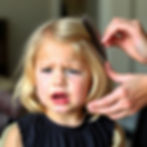
I tried to explain calmly at first, but my panic was bubbling up faster than I could control. Her ponytail swung in front of her face as she protested, “But I don’t want a bun!” And I lost it. I raised my voice, frustration pouring out of me. “Do you really want lice?!” I demanded, my heart racing, my hands shaking. “I know it’s heavy, I know it’s uncomfortable, but too bad! You have to put it up!”
She froze, then started to cry. “You’re being so unreasonable!” she sobbed, and in that moment, I saw her confusion, her fear, and her helplessness. I realized that she didn’t even know what lice was, let alone why I was panicking. My anger had taken over before I had a chance to teach her anything.
I took a deep breath, softened my voice, and tried not to imagine lice crawling into every corner of the house. I sat her down, showing her a picture of a louse in one of my books. I explained carefully, pointing out how they live in hair, jump from head to head, and how tricky they are to remove. I told her how exhausting it can be to get rid of them once someone catches them.
As I spoke, I watched her eyes widen, her fear turning into understanding. She nodded slowly, absorbing the information. “Oh,” she said quietly, “so that’s why I need to put my hair up.” Relief washed over her face, and just like that, she agreed to wear a bun without another word.
The Lice Lesson That Led to Sleep Education
That day, the lice panic reminded me of something important: this is exactly how we treat sleep with our kids.
We yell at them to go to bed. We set rules, impose routines, and insist on cooperation. But often, we forget to explain the why. We forget to teach our children how sleep works. We forget to help them feel their own body’s cues and understand why certain foods, screens, or activities affect their tiredness.
Just like with lice, fear and rules alone don’t work. Kids cooperate best when they understand. When they are included in the process, educated about the reasons, and respected for their feelings, they respond with curiosity, care, and willingness.
How to Start Sleep Education Tonight
Tonight, you can start this in your home. Sit with your child and ask about their own sleep: when do they feel tired? What helps them wind down? How do they feel in the mornings? Explain how much sleep is recommended for their age, why their bodies need it, and how tuning in to their own cues helps them feel rested and energized.
Show them what wind-down time could look like: if it’s reading, journaling at their age level, talking about their day, doing a puzzle, or listening to an educational audio — all of these help them learn, reflect, and relax. This isn’t just about tonight; it’s teaching them a skill for life and helping them feel empowered to make choices that support their sleep.
When children understand the reason behind bedtime, the resistance melts away. They feel seen, respected, and capable. And you? You’ll sleep a little easier too, knowing panic and frustration don’t have to rule the night.
A Personal Invitation
If you ever feel like you need to talk to another mom, a mom who totally gets you, a mom who has kids of all ages, a mom who’s given melatonin for over 10 years, a mom who’s had a child awake at 12 a.m. for hours — then please, book a complimentary call with me. I get you. 💛
You can also check out my blog for more real-life stories and tips: When Parenting Books and Doctors Couldn’t Help: Brenda’s Sleep Story